

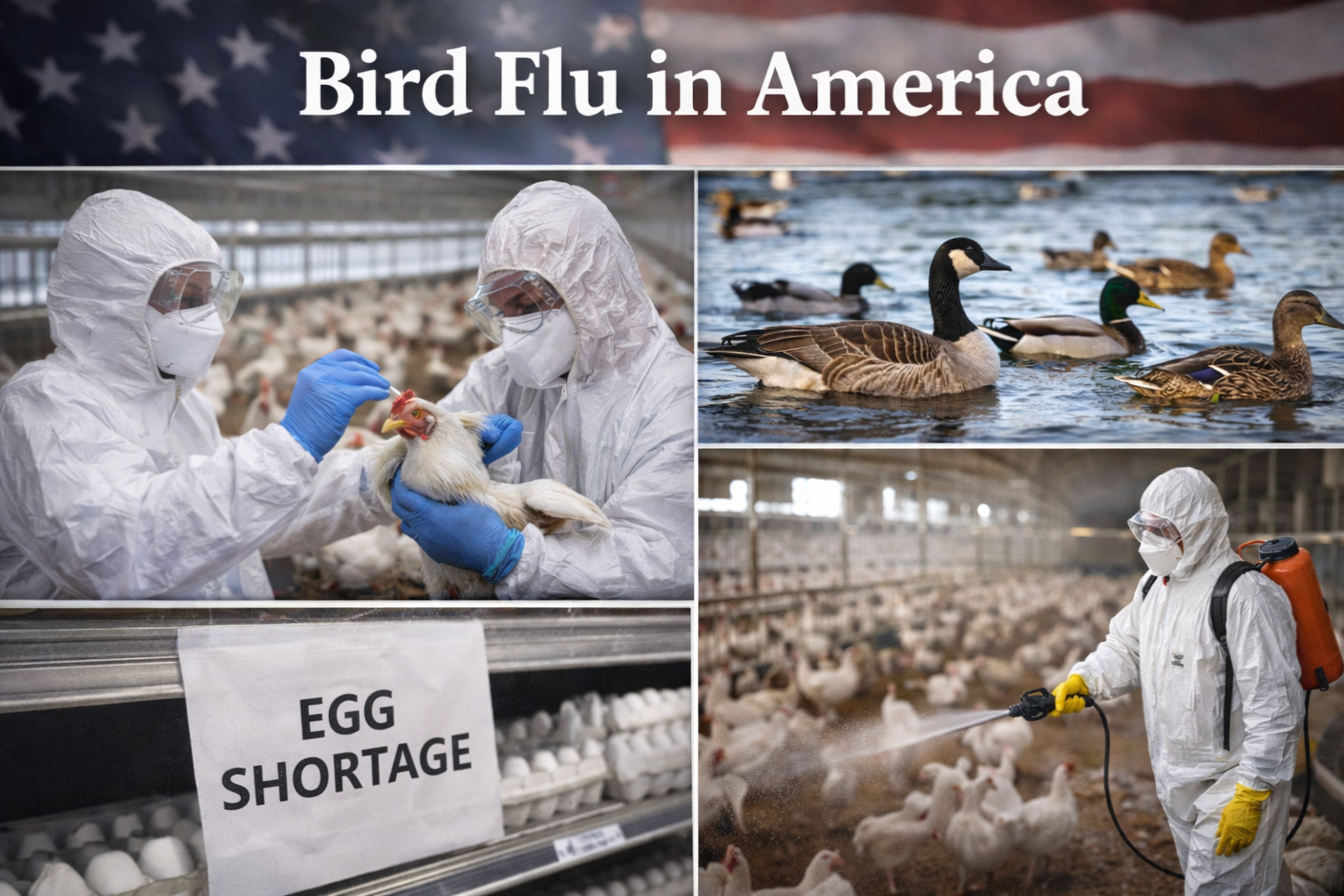

Bird flu, also known as avian influenza, has become a serious concern in the United States in recent years. In 2026, health officials and farmers continue to deal with outbreaks that affect poultry farms, food supply, and the economy. While most cases are found in birds, experts are closely watching the situation to protect both animals and people.
What Is Bird Flu?
Bird flu is a viral disease that mainly spreads among birds such as chickens, ducks, and turkeys. It can also infect wild birds, which often carry the virus across long distances during migration.
Some types of bird flu are mild, but others are highly dangerous and can kill large numbers of birds in a short time.
Current Situation in the US
According to the Centers for Disease Control and Prevention and the United States Department of Agriculture, several states have reported bird flu cases in commercial farms and wild birds.
When an outbreak is detected, affected birds are usually removed to stop the virus from spreading. Farms are placed under strict control, and movement of poultry is limited.
These steps help reduce risk, but they also create challenges for farmers.
Impact on Farmers and Food Prices
Bird flu has had a major effect on the poultry industry. Millions of birds have been lost in past outbreaks, leading to lower production of eggs and chicken meat.
Because of this, consumers often see:
- Higher egg prices
- Limited supply of poultry products
- Increased farming costs
Small farmers are especially affected, as outbreaks can damage their income for months.
Risk to Humans
Health experts say the risk to the general public is still low. Most human infections happen only after close contact with infected birds.
So far, there is no strong evidence that bird flu spreads easily from person to person. However, officials continue to monitor the situation closely.
People who work on farms or handle birds are advised to use safety equipment and follow hygiene rules.
Steps Taken by Authorities
To control bird flu, government agencies are taking several actions:
- Testing birds regularly
- Monitoring wild bird movement
- Improving farm safety rules
- Educating farmers
- Supporting affected businesses
The CDC and USDA also share updates with the public to prevent panic and misinformation.
How People Can Stay Safe
For most people, simple precautions are enough:
- Avoid touching sick or dead birds
- Wash hands after handling poultry
- Cook chicken and eggs properly
- Buy food from trusted sources
- Follow local health advice
These steps help reduce any possible risk.
Long-Term Challenges
Experts say bird flu may continue to return because wild birds can carry the virus naturally. Climate change, migration patterns, and crowded farming conditions can make outbreaks more likely.
Scientists are working on better vaccines for birds and improved detection systems to reduce future damage.
Conclusion
Bird flu remains a major issue in America, especially for farmers and the food industry. While the risk to everyday people is low, its economic impact is significant. Through strong monitoring, safety measures, and public awareness, authorities are trying to control the disease and protect both animals and humans.
Staying informed and following basic precautions are the best ways to stay safe as the situation continues to develop.