
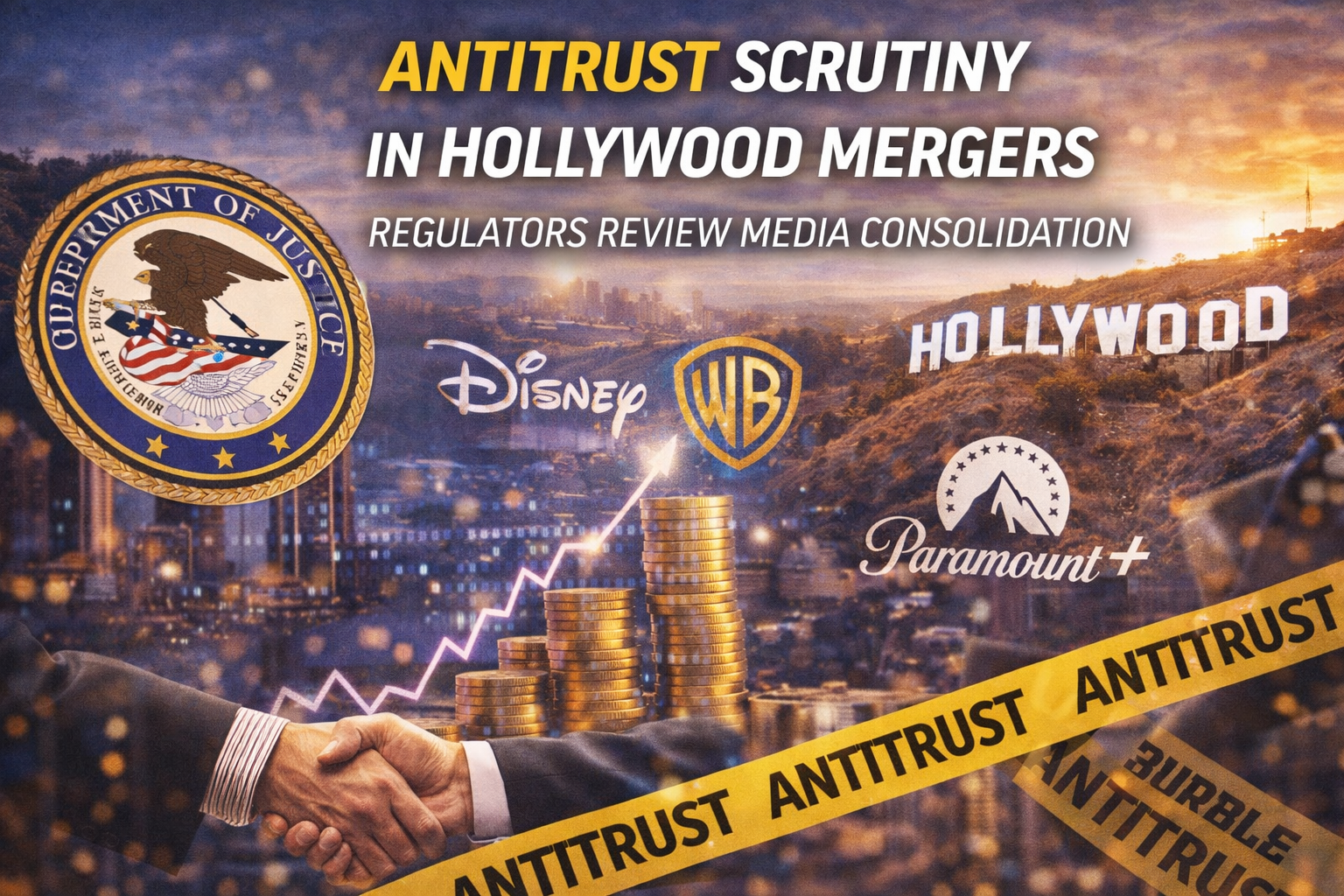

Antitrust scrutiny in Hollywood is increasing as U.S. regulators closely examine mergers and acquisitions involving major entertainment companies. The growing concern centers on whether consolidation in the media and entertainment industry could reduce competition, limit consumer choice, and concentrate too much power in the hands of a few large corporations.
Regulators Focus on Market Competition
Federal regulators, including the Department of Justice (DOJ) and the Federal Trade Commission (FTC), are carefully reviewing recent and proposed mergers between film studios, streaming platforms, and media companies. Officials are concerned that large-scale mergers could create monopolies or unfair market advantages.
Regulators are evaluating whether these deals could lead to fewer independent studios, reduced competition in streaming services, and higher prices for consumers. The goal is to ensure that the entertainment industry remains competitive and fair.
Streaming Wars Drive Industry Consolidation
The rapid growth of streaming platforms has fueled a wave of mergers and partnerships. Companies are trying to strengthen their content libraries, expand global reach, and compete with major platforms like Netflix, Disney+, and Amazon Prime Video.
As streaming becomes the primary way people consume entertainment, media companies are merging to survive and remain competitive. However, regulators worry that too much consolidation could harm smaller competitors and limit diversity in content.
Concerns Over Creative Freedom and Consumer Choice
Industry experts warn that large mergers could impact creative freedom and reduce opportunities for independent filmmakers and smaller production studios. If fewer companies control most of the industry, they may prioritize profits over creative risk-taking.
Consumers could also be affected through higher subscription costs, fewer platform choices, and exclusive content locked behind specific services.
Recent Deals Under Review
Several recent merger proposals involving major studios and entertainment companies are currently under review. Regulators are analyzing whether these deals would give companies excessive control over film production, distribution, and streaming rights.
Antitrust officials are also examining how mergers could impact advertising markets, talent contracts, and global content distribution.
Industry Response and Defense
Media companies argue that mergers are necessary to compete in a rapidly evolving global entertainment landscape. They say consolidation helps improve efficiency, expand content production, and compete with international rivals.
Companies also claim that mergers benefit consumers by offering better content, improved technology, and stronger streaming platforms.
Future Outlook
Antitrust scrutiny is expected to remain strong as Hollywood continues to evolve. Regulators are likely to impose stricter rules and conditions on future mergers to protect competition.
Conclusion
The increased antitrust scrutiny in Hollywood reflects growing concerns about market concentration and competition. As regulators review major media mergers, their decisions will shape the future of the entertainment industry, affecting studios, creators, and audiences worldwide.