

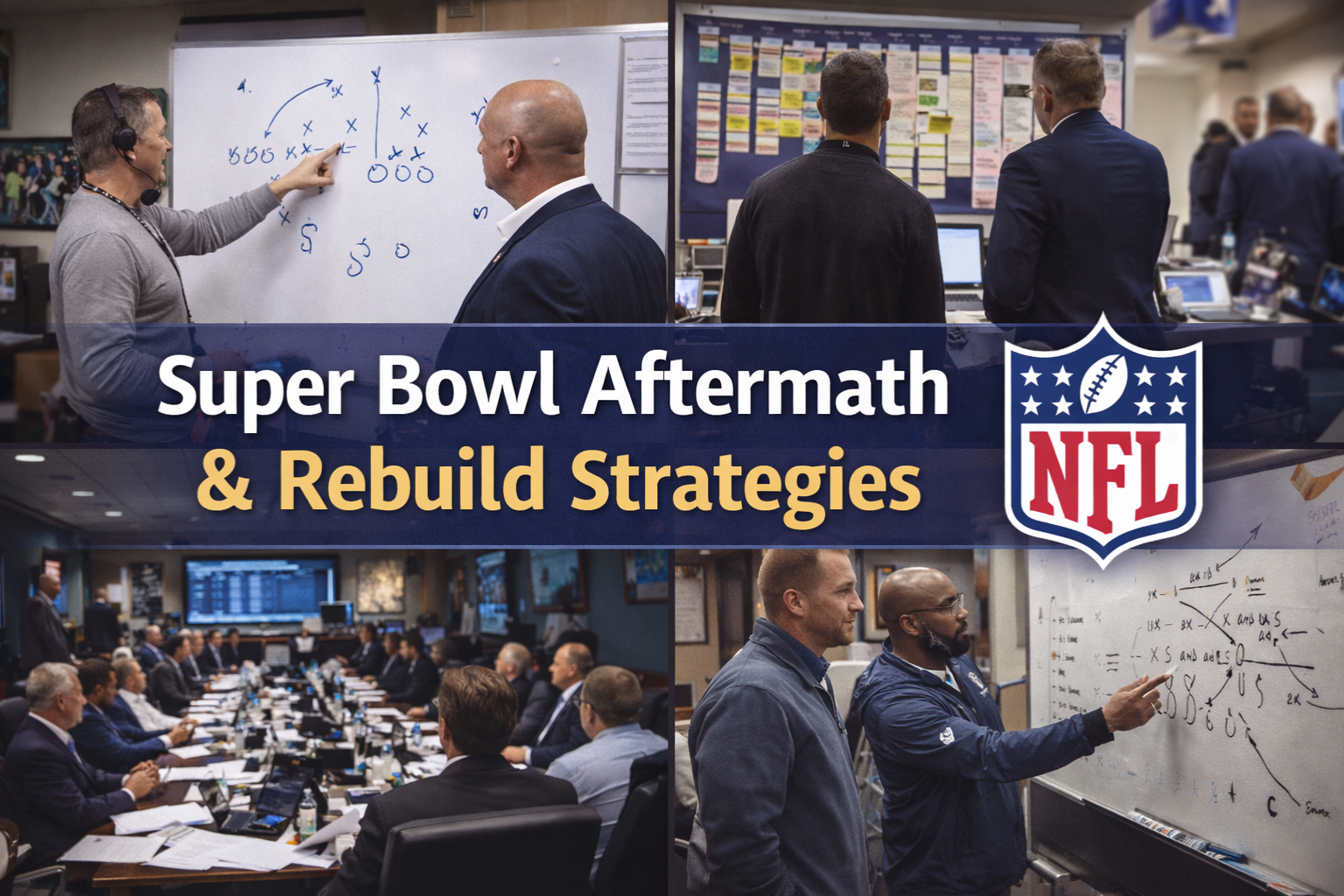

After the excitement of the Super Bowl ends, teams across the National Football League shift their focus to the offseason. This period is all about reviewing performance, fixing weaknesses, and planning for the next season.
Once the season ends, teams begin by analyzing their full year. They look at which players performed well, where the team struggled, how injuries affected results, and which positions need improvement. Coaches and managers study game footage and statistics to understand what went wrong and what worked. This helps them decide who to keep, who to release, and who to replace.
Teams that reach or win the Super Bowl usually try to keep their core players. These are the star athletes and leaders who helped bring success. Their main goals include re-signing important players, managing salary budgets carefully, adding depth through small trades, and drafting young talent for backup. Instead of making big changes, these teams focus on small improvements to stay competitive.
Teams that fail to reach the playoffs or lose badly often start a rebuild. This means making bigger changes to their roster and staff. Common steps include trading veteran players for draft picks, signing young and affordable players, changing coaches or support staff, and giving more chances to rookies. These teams focus more on long-term success rather than quick wins.
Two major tools help teams rebuild. The first is the player draft, where teams choose new talent from college. Strong draft picks can change a team’s future, and many successful franchises are built through smart drafting. The second is free agency, where teams sign experienced players from other clubs. This helps fill gaps quickly, especially in important positions. The best teams balance both methods wisely.
Salary management is also very important. Every team has a budget limit, and spending too much on a few star players can weaken the rest of the squad. Smart teams avoid overpaying, spread money across positions, and plan contracts years in advance. Poor financial decisions can hurt a team for many seasons.
After disappointing seasons, teams often make changes in coaching and leadership. New coaches can bring fresh ideas, better discipline, and new playing styles. Sometimes, this change helps teams improve quickly and build a stronger identity.
Fans also play a role in rebuild pressure. After a bad season, supporters expect fast improvement. This puts stress on team owners and managers to act quickly. However, successful rebuilds usually take time. Most strong teams need two to three years to fully recover and become serious contenders again.
In conclusion, the period after the Super Bowl is just as important as the game itself. It decides how teams will perform in the future. Winning teams focus on staying strong, while losing teams focus on rebuilding. Through smart drafting, careful spending, and good leadership, teams try to return stronger in the next season. In the NFL, success is not built in one game, but through smart planning after the season ends.