

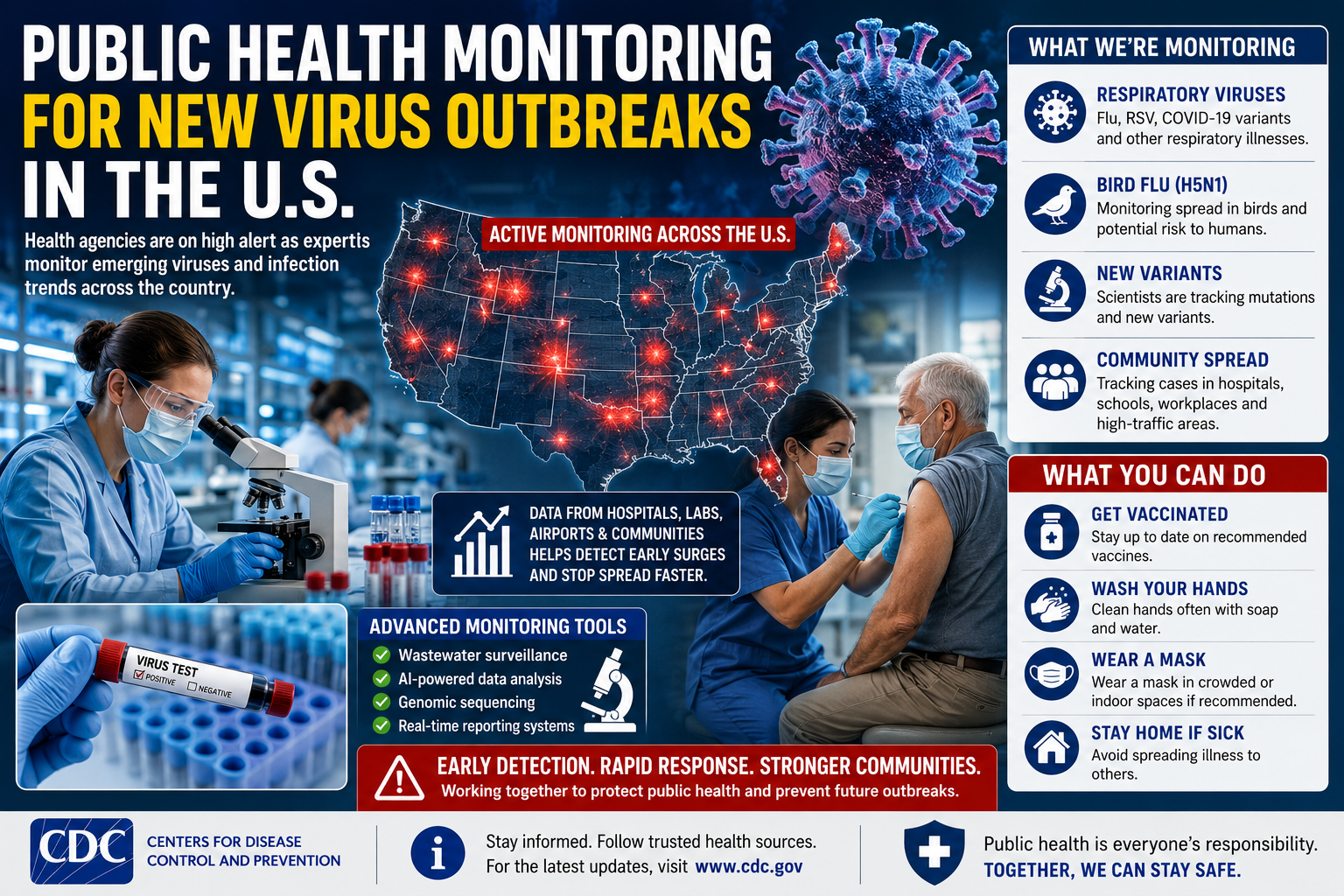

Public health agencies across the United States are increasing surveillance and monitoring efforts as officials respond to concerns about emerging virus outbreaks and infectious disease threats. Health experts say early detection and rapid response remain critical in preventing widespread transmission and protecting vulnerable communities.
The Centers for Disease Control and Prevention continues tracking several viruses, including seasonal influenza strains, respiratory illnesses, bird flu cases, and other potential public health risks. Officials are closely watching infection trends in hospitals, schools, airports, and local communities to identify unusual spikes in illnesses.
Recent outbreaks of respiratory infections in some states have renewed discussions about national preparedness and healthcare readiness. While many cases remain mild, health experts warn that viruses can spread quickly through travel, crowded gatherings, and changing weather conditions. Public health authorities are also monitoring mutations and new variants that could potentially increase transmission rates.
One growing concern involves the H5N1 bird flu virus, which has affected poultry farms and wild bird populations in several regions. Although the risk to the general public remains low, health officials are carefully studying isolated human infections and possible animal-to-human transmission patterns. The agriculture industry has also increased safety measures to limit outbreaks among livestock and poultry operations.
Experts say lessons learned from the COVID-19 pandemic continue influencing current health strategies. Many hospitals and state agencies have improved emergency response systems, expanded testing capabilities, and strengthened disease reporting networks. Public health departments are also emphasizing the importance of vaccination programs, hygiene awareness, and rapid communication during potential outbreaks.
Technology now plays a major role in outbreak monitoring. Artificial intelligence, wastewater testing, and digital health tracking systems are helping researchers identify possible disease activity earlier than traditional reporting methods. Scientists believe these tools could improve future pandemic prevention efforts and allow faster responses to emerging threats.
However, health officials also face challenges including misinformation on social media, public distrust, and healthcare staffing shortages. Some experts worry that declining vaccination rates in certain communities could increase vulnerability to future outbreaks.
Federal and state agencies continue urging Americans to stay informed through reliable medical sources and follow public health guidance when necessary. Officials emphasize that preparedness, transparency, and scientific cooperation remain essential to reducing the impact of future virus outbreaks in the United States.